

How Do I Start Baking
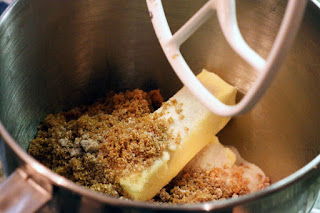
Baking is a science as well as it is art. Any slight changes in the recipe can make a difference. Each ingredient has a job to do. Take cake for example, flour provides the structure; baking powder gives the cake airiness; eggs bind the ingredients; butter and oil tenderize; sugar sweetens and milk or water provides moisture.. so u see, baking is an exact science...if u know the ingredients and how it behaves, then you have a better chance of baking.
Baking is much easier than you think... if you follow these steps...
1. Begin by preparing your cake pans. Grease and flour them.
2. Get the recipe for what u want to bake
3. Preheat the oven to the temperature as directed by the recipe.
4. Sift dry ingredients.
5. Break and whisk eggs until it is foamy.
6. Cream margarine and/or shortening until soft and fluffy.
7. Add eggs to the cream.
8. Gradually add dry ingredients and fold in and add flavours.
9. Pour into the greased pans and bake in the oven.
10. Do not open oven until cake is done.
BAKING TERMS
The language of baking clarifies what techniques and methods are needed for each recipe. It is easy to master any recipe with knowledge of these baking terms.
Bake: to cook in an oven with dry heat. The oven should always be heated for 10 to 15 minutes before baking.

Beat: to thoroughly combine ingredients and incorporate air with a rapid, circular motion. This may be done with a wooden spoon, wire whisk , rotary eggbeater, electric mixer, or food processor.
Caramelize: to heat sugar until it is melted and brown. Caramelizing sugar gives it a distinctive flavour.
Cut in: to distribute solid fat throughout the dry ingredients using a pastry blender, fork or two knives in a scissors motion.
Dash: a measurement less than 1/8 teaspoon
Dot: to distribute small amount of margarine or butter evenly over the surface of pie filling or dough.
Drizzle: to drip a glaze or icing over food from the tines of a fork or the end of a spoon
Dust: to sprinkle lightly with sugar, flour or cocoa
Glaze: to coat with a liquid, thin icing, or jelly before or after food is cooked
Combine: To mix ingredients together
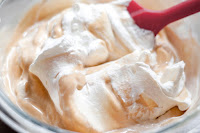
Cream: To beat until smooth, soft and fluffy.
Fold in: To gently mix by bringing rubber scrapper down through mixture across the bottom, up and over top until blended
Grease: To spread the bottom and sides of a pan with shortening or margarine to prevent sticking.
Knead: To fold, turn and press dough with heel of your hand in order to develop the gluten and make dough more elastic.
Roll: To flatten and spread with a rolling pin.
Sift: To put dry ingredients such as flour through a sieve.
Well: To make a hole in dry ingredients in which you pour liquid.
Whip: To beat with a rotary egg beater or electric mixer to add air.
Batter: A semi-liquid mixture of ingredients such as flour, sugar, milk, eggs and flavouring that is thin enough to pour.
Dough: a pre-baked soft or firm mixture of ingredients such as butter, sugar, eggs and flavouring.
Partially set: to refrigerate gelatin mixture until it thickens to the consistency of unbeaten egg whites.
Proof: to allow yeast dough to rise before baking. Or to dissolve yeast in a warm liquid and set it in a warm place for 5 to 10 minutes until it expands and becomes bubbly
Softened: margarine, butter, ice cream or cream cheese that is in a state soft enough for easy blending, but not melted.
Soft peaks: egg whites or whipping cream beaten to the stage where the mixture forms soft, rounded peaks when the beaters are removed.
Stiff peaks: egg white beaten to the stage where the mixture will hold stiff, pointed peaks when the beaters are removed.
Zest: the coloured outer peel of citrus fruit, which is used to add flavour.
Now we are acquainted with some of the term used in baking. It will be easy for u to understand a recipe....
In baking, proper preparation, measurement, safety and hygiene cannot be over emphasized.
Preparation negates last minutes trip to the market. Baking is so much enjoyable when u are prepared.


Comments